
Crushed Stone vs. Limestone Dust: The #1 Sub-Base Mistake That Ruined Your Turf Drainage
Spending thousands of dollars on a synthetic lawn should guarantee a clean, mud-free backyard. Homeowners anticipate a smooth surface that looks pristine through every season without endless mowing or watering.
However, heavy rainstorms across Southwestern Ontario often reveal a frustrating surprise. Instead of water disappearing instantly, pools collect across the lawn.
The issue rarely lies within the synthetic grass itself. It starts with the aggregate base layer buried directly beneath the carpet backing. Understanding the difference between crushed stone and limestone dust keeps your yard dry and your home safe.
The Limestone Dust Trap: Why Fine Screenings Fail
Landscapers frequently use limestone dust, also known as stone dust or limestone screenings, because it is inexpensive and easy to level. It creates a flat, smooth surface under synthetic carpet.
| Base Material | Drainage Performance | Impact on Synthetic Turf |
| Limestone Dust / Fines | Impermeable Sclera | Compacts tight like concrete when wet, completely blocking vertical water drainage. |
| 3/4″ Clear Crushed Stone | High-Flow Voids | Leaves open air pockets that allow rapid water flow into sub-grade drains. |
| Sand Layers | Unstable / Clogging | Shifts over time under foot traffic and washes into backing drainage holes. |
| Crushed Run (Granular A) | Poor Clay Drainage | Contains too many fine dust particles, reducing permeability over heavy soil. |
The Concrete Effect Under Synthetic Grass
Limestone dust consists of tiny crushed rock particles mixed with fine powder. When installers smooth and roll this material, it fills every available space.
- Water hits the fine powder and activates natural calcium deposits in the stone.
- Sun drying cures the compacted dust layer into a hard, cement-like sheet.
- Rainwater cannot pass through the dense slab, stopping natural ground absorption.
Once limestone dust compacts, it acts like a solid concrete pad beneath your lawn.
Clogged Backing Perforations and Surface Pooling
Synthetic carpet rolls contain small drainage holes punched into their rubber backing. These perforations allow water to drop straight into the ground.
- Fine limestone particles wash upward during heavy rainstorms.
- Rock dust settles into the small rubber backing holes.
- Trapped dust hardens inside the holes, sealing off vertical drainage paths.
When backing holes clog, rainwater gathers on top of the turf, turning your lawn into an outdoor pool.
Why Clear Crushed Stone Prevents Water Traps
Proper artificial turf installation relies on coarse, angular aggregate that maintains structural integrity while allowing water movement.

The Science of Angular Air Voids
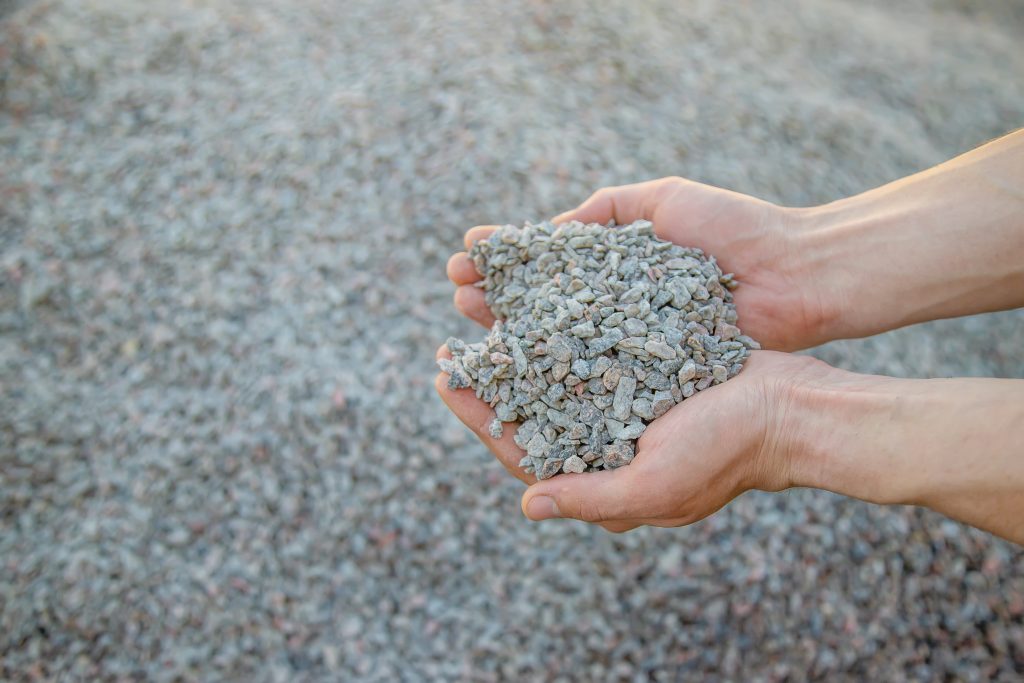
Three-quarter inch clear crushed stone consists of washed, uniform rock pieces without fine dust particles.
- Individual angular stones interlock under compaction to support heavy foot traffic.
- Uniform rock sizes leave roughly thirty percent open air space between stones.
- Open spaces act as a temporary underground reservoir during flash downpours.
Water passes through clear crushed stone instantly, preventing surface pooling regardless of rainfall volume.
Managing Heavy Clay Soil in Southwestern Ontario
Native soil across London, Ontario consists of heavy, non-porous clay. Clay holds water and resists natural absorption.
- Fine limestone dust placed directly over clay turns into a muddy paste.
- Clear crushed stone maintains open drainage paths directly above dense clay pans.
- Water flows sideways through clear stone voids toward perimeter discharge routes.
Using clear stone prevents clay soil from trapping water under your outdoor living space.
How to Prevent Standing Water on Artificial Turf
Fixing or building a synthetic lawn requires a complete drainage plan designed for local soil conditions. You can explore creative layout ideas on Evolution of Style when planning outdoor upgrades, but sub-grade mechanics must come first.
| Drainage Layer | Key Components | Purpose & Technical Spec |
| Sub-Surface Drainage | Perforated French Drain Pipes | Directs captured water away from lawn edges toward dedicated runoff points. |
| High-Flow Geotextile Fabric | Prevents fine clay soil particles from clogging the drainage core. | |
| Catch Basin Connection | Discharges heavy storm runoff directly into designated drainage outlets. | |
| Aggregate Base | 3/4-Inch Clear Stone | Maintains ~30% open air voids for rapid water flow into the ground. |
| 4 to 6-Inch Base Depth | Creates a stable, heavy-duty reservoir layer directly below turf backing. | |
| Positive 2% Sub-Grade Slope | Directs subterranean water flow away from building foundations. |

Installing Sub-Surface French Drain Channels
Heavy clay soils require dedicated discharge routes beneath the aggregate base.
- Dig deep trenches along low lawn edges into native clay subsoil.
- Line trenches with non-woven geotextile fabric to keep fine clay out.
- Lay perforated drainage pipe wrapped in washed clear crushed stone.
- Connect discharge pipes to catch basins, gravity outlets, or street lines.
Sub-surface French drains collect migrating water before it saturates aggregate base layers.
Correcting Sub-Grade Slope and Geotextile Layers
Surface preparation determines whether water moves away from your house or pools against your foundation.
- Grade native sub-soil to maintain a minimum two percent slope away from building walls.
- Lay heavy-duty geotextile fabric over native clay to separate soil from base stone.
- Install four to six inches of clear crushed stone over the filter fabric.
- Compact stone layers using a vibrating plate compactor to lock angular edges.
Proper base layering helps prevent standing water on artificial turf before moisture causes structural issues.
The Financial Risk of Trapped Sub-Base Water
Unabsorbed water trapped beneath synthetic grass leads to expensive repairs if ignored.
| Category | Specific Risk | Impact on Property |
| Lawn Damage | Squishy Footing | Water traps between carpet backing and compacted dust, creating a sponge-like surface. |
| Odor & Mildew | Stagnant water and trapped pet urine produce harsh ammonia and mold odors. | |
| Uneven Panels | Sub-base erosion causes shifting, sinking, and exposed seam edges. | |
| Home Damage | Hydrostatic Pressure | Underground water builds continuous physical pressure against concrete footings. |
| Foundation Seepage | Trapped moisture forces its way through wall micro-cracks into the basement. | |
| Sump Overwork | Saturated soil surrounding footings keeps indoor sump pumps running constantly. |
Squishy Surfaces, Mildew, and Pet Odors
Water trapped inside fine limestone dust creates an unstable, squishy feeling underfoot.
- Stepping on saturated turf forces trapped muddy water upward through backing holes.
- Stagnant water sitting in fine dust breeds mildew and mold spores outdoors.
- Pet urine settles in saturated limestone dust, releasing harsh ammonia smells in summer heat.
A properly built aggregate base remains firm, dry, and odor-free throughout the year.
Hydrostatic Pressure and Basement Wall Seepage
Water sitting trapped in sub-base stone travels along the path of least resistance.
- Unabsorbed water collects along buried concrete foundation walls.
- Underground water creates continuous hydrostatic pressure against concrete footings.
- Moisture forces its way through settling cracks, cold joints, and porous block walls.
Ignoring lawn drainage issues often results in wet basement carpets and costly interior repairs.
Fixing a Failed Sub-Base Without Starting Over
If your synthetic lawn already suffers from poor drainage, you may not need to replace the entire installation.
Specialists can peel back existing carpet sections along affected edges to access the aggregate below.
- Excavate narrow trenches through the compacted limestone dust layer.
- Install sub-surface French drain lines directly into the native clay subsoil.
- Replace surrounding dust with washed clear stone to establish water flow routes.
- Secure and seam carpet panels back into position over the upgraded base.
Partnering with professional drainage experts restores proper water flow while protecting your home investment. Reviewing specialized drainage services helps you choose the right repair strategy for your property.
FAQs
Why is water standing on my artificial turf if the carpet has drainage holes?
Water stands on synthetic turf when the sub-base material beneath it compacts tight. Fine limestone dust or sand blocks water from draining into native soil, keeping moisture trapped above the base layer.
Is limestone dust good for artificial turf bases?
No. Limestone dust contains fine particles that compact into a solid barrier when wet. It blocks vertical water drainage and should be replaced with washed three-quarter inch clear crushed stone.
Can I install artificial turf directly over clay soil in Ontario?
No. Heavy clay soil holds water and prevents natural drainage. Installing synthetic grass over clay requires excavating four to six inches, laying geotextile fabric, and installing clear stone with sub-surface piping.
How do I fix a squishy spot on my synthetic lawn?
Squishy spots mean water is trapped in the sub-base. A drainage specialist can peel back the turf, remove compacted fine stone, install clear crushed rock with a French drain, and re-lay the carpet.