
How to Stop Standing Water: 4 Backyard Drainage Solutions for Ontario Lawns
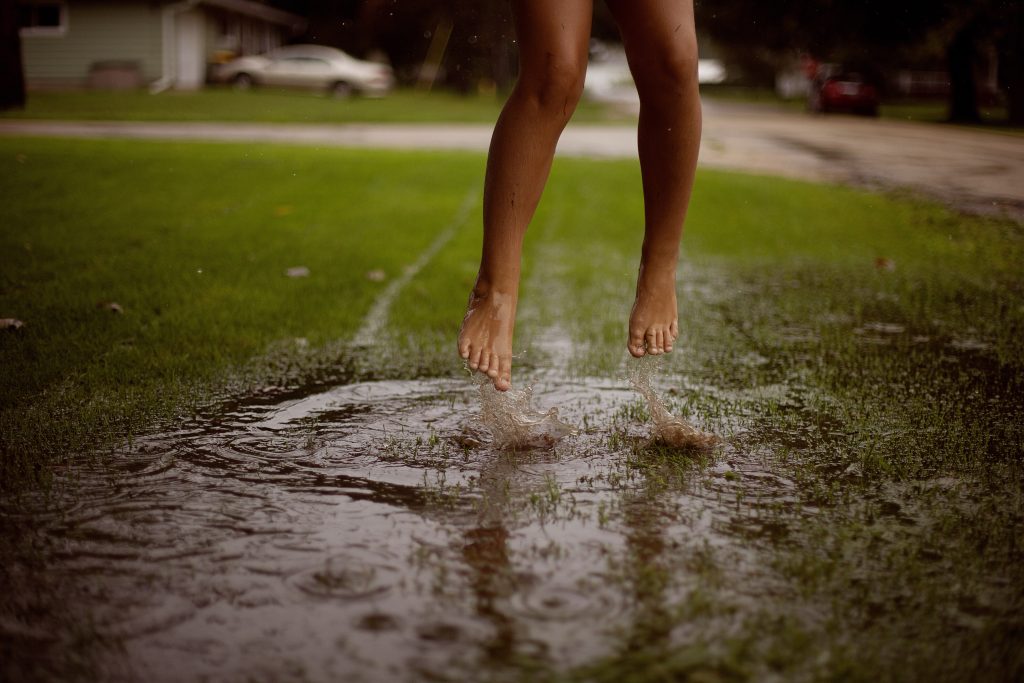
Southwestern Ontario is known for its heavy clay soil. Unlike sandy soil which allows rain to soak in quickly, clay acts like a waterproof barrier. When the ground reaches its saturation point the water has nowhere to go but up. This results in standing water that drowns your grass and creates a breeding ground for mosquitoes.
If you notice water pooling within two metres of your house you are dealing with a “Foundation Fear” scenario. Water exerts hydrostatic pressure against your basement walls. Over time this pressure causes tiny cracks that eventually lead to costly leaks or structural shifts. Addressing these issues early with backyard flooding and standing water solutions is the best way to avoid a five-figure repair bill later.
1. French Drains: The Subsurface Workhorse
A French drain is one of the most effective ways to handle groundwater that refuses to dissipate. It consists of a trench filled with gravel and a perforated pipe. The pipe “whisks” the water away from the soggy area and deposits it in a safer location like a storm sewer or a lower part of the property.
For Ontario lawns this is often the go-to choice because it handles the water you can’t see. Even if the surface looks okay the soil underneath can remain a swamp. A French drain keeps the water table low enough that your grass roots can breathe and your lawn stays firm enough to walk on.
2. Catch Basins for Immediate Relief
Sometimes the problem isn’t the soil but the volume of water coming off your roof or patio. During intense storms your gutters might overflow or your downspouts might dump too much water in one spot. This is where a catch basin becomes essential.
A catch basin is a buried box with a grate on top. It sits at the lowest point of your yard or at the end of a downspout. It catches the surface water immediately before it has a chance to soak the ground. The water then travels through solid PVC pipes to an exit point. Think of it as a floor drain for your backyard. It is an immediate fix for “Usable Space” frustrations because it clears surface puddles in minutes rather than days.
3. Professional Regrading and Swales
The most permanent solution for standing water is often changing the shape of the land itself. Your yard should ideally slope away from your home at a grade of at least two percent. Over time homes “settle” and the ground can sink near the foundation creating a bowl effect.
Regrading involves moving soil to restore that vital slope. In some cases we create a “swale” which is a shallow, grass-lined channel designed to direct water flow. This is a natural-looking solution that guides runoff toward the street or a drainage easement. According to LawnStarter, properly grading your lawn is the first line of defence against water pooling. It ensures gravity works for you rather than against you.
4. Dry Wells and Sump Systems
What happens if your property is lower than the surrounding area? In many parts of London and Middlesex County you might not have a natural “downhill” to send the water. In these cases we look at a dry well or an outdoor sump system.
A dry well is a large underground chamber that holds a massive volume of water and slowly releases it back into the deep soil layers. If the volume of water is too great for a dry well we install an outdoor sump pump. This pump sits in a basin and mechanically pushes the water out to the municipal storm system. This is the ultimate “fail-safe” for properties that suffer from chronic Ontario yard flooding.
Why DIY Drainage Often Fails
It is tempting to grab a shovel and a roll of black corrugated pipe from a big-box store. However drainage is a matter of physics and local law. In Ontario you cannot legally “solve” your water problem by simply dumping it onto your neighbour’s property. Doing so can lead to lawsuits and fines.
Professional drainage contractors use laser levels to calculate exact slopes. We also understand the local soil composition. A pipe buried at the wrong depth or with the wrong type of gravel backfill will clog with silt in less than two years. When you hire an expert you are paying for a system that lasts for decades not just one season.
Protecting Your Health and Home
Beyond the structure of the house standing water is a health hazard. It only takes 24 to 48 hours for a puddle to become a nursery for mosquitoes that carry West Nile virus. Furthermore constant dampness promotes the growth of mould and fungus in your lawn which can be tracked into your home by pets.
By fixing your drainage you are removing these risks. You are creating a dry, safe environment for your family to enjoy the short but beautiful Ontario summers. You shouldn’t have to wait three days after a rainstorm to host a barbecue or let your children play outside.

Take the Next Step
Every property is unique. The solution that worked for your neighbour might not work for you due to different elevations or soil density. If you are tired of losing your backyard to the mud it is time to get a professional assessment. We can help you identify exactly where the water is coming from and the most cost-effective way to move it.
Don’t wait for the next heavy rain to worry about your foundation. Contact Ashworth Drainage today for an inspection. We provide the expertise needed to keep your basement dry and your lawn beautiful for years to come.
FAQs
How long should water sit in my yard before it’s a problem? Generally water should soak into the ground or drain away within 24 hours of a rainstorm. If you still have puddles after 48 hours you likely have a drainage issue that needs professional attention.
Will a French drain freeze in an Ontario winter? If installed at the correct depth and with the proper slope a French drain will not freeze. The water should always be moving or have exited the pipe before it has a chance to turn to ice.
Does homeowners insurance cover backyard flooding? Most standard policies cover sudden water damage but rarely cover “seepage” or “groundwater” issues caused by poor drainage. Investing in a drainage system is usually a maintenance responsibility of the homeowner.
Can I use a French drain to fix a wet basement? An exterior French drain (often called a weeping tile) is a primary way to protect a basement. By intercepting water before it hits your foundation walls you significantly reduce the risk of basement leaks.